Enterprise Architecture Guide · Series 3 · 2026

จาก AI Coding สู่
Governed AI Delivery Platform:
เส้นทางใหม่ของ Enterprise Software Engineering

เมื่อ AI เขียน code ได้เร็วขึ้น องค์กรที่ขาด context, specification และ governance จะพบว่า AI ไม่ได้แก้ปัญหา technical debt — แต่เร่งให้มันสะสมเร็วขึ้น

Governed AI Delivery Spec-Driven Development Enterprise Architecture Vibe Coding 2026
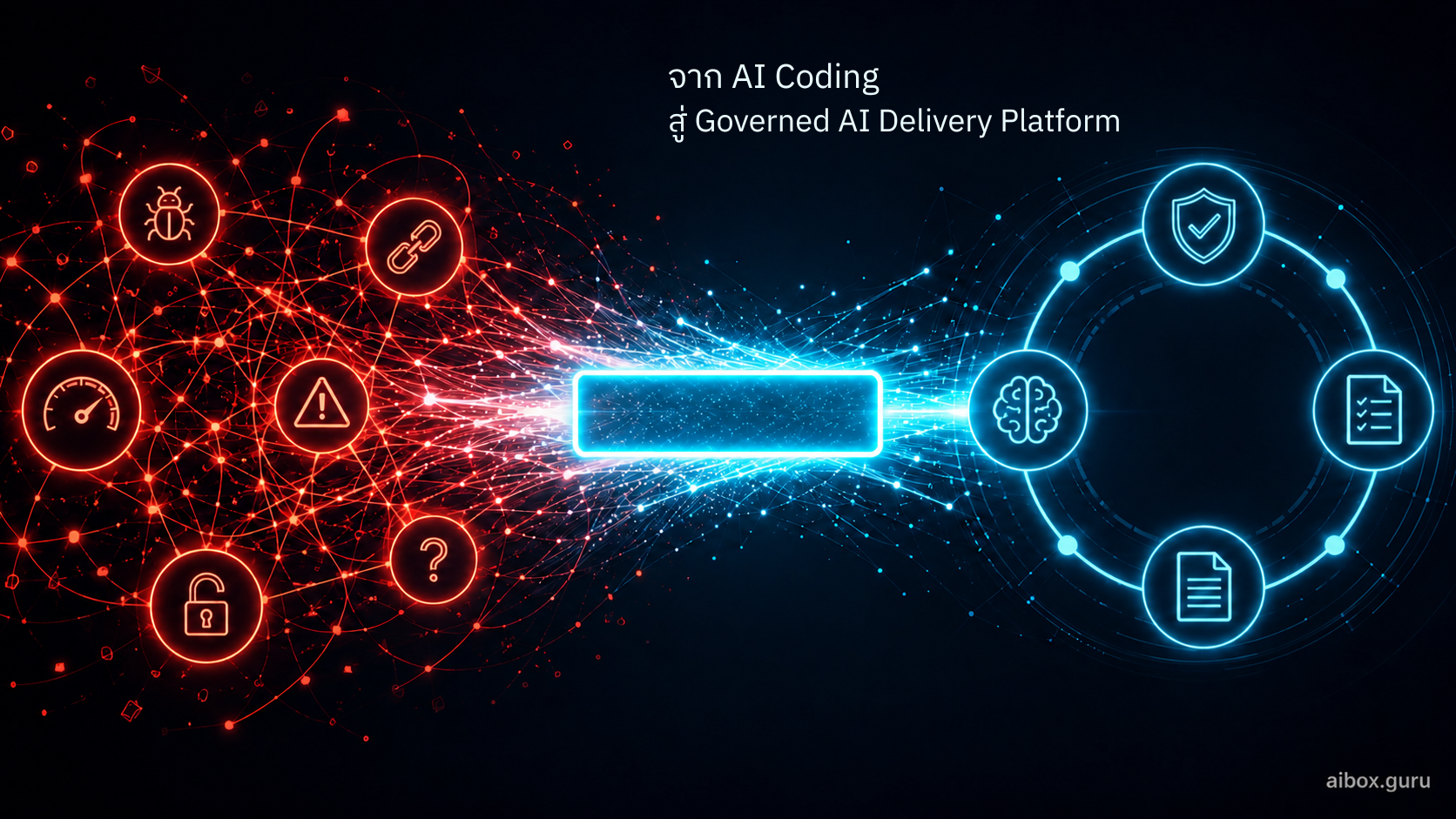
Governed AI Delivery Platform cover
จากการเขียน code ที่ขาด governance สู่ Governed AI Delivery Platform — operating model ที่ AI ทำงานได้อย่างปลอดภัย ตรวจสอบได้ และ scale ได้จริง
วิธีอ่านบทความนี้: บทความนี้เป็น enterprise architecture guide สำหรับการออกแบบ AI delivery operating model ที่รวม context, specification, governance และ audit trail ไว้ใน workflow เดียว โดยเนื้อหาอ้างอิงจาก Markdown ต้นฉบับแบบ faithful conversion

สารบัญ

Problem

1. จาก Context Loss สู่ Delivery Risk: เมื่อปัญหาของ AI Coding ขยายจากโปรเจกต์สู่องค์กร

สองบทความก่อนหน้าในซีรีส์นี้วางรากฐานไว้สองชั้น — Context Engineering แก้ปัญหา session memory ของ AI agent ในระดับโปรเจกต์ และ Enterprise AI Memory ยกระดับขึ้นไปอีก ด้วยการทำให้ AI เข้าใจความสัมพันธ์ระหว่างระบบ API data domain และ policy ขององค์กร

แต่เมื่อ AI coding เริ่ม scale เข้าสู่ enterprise จริง ปัญหาไม่ได้จบแค่ "AI รู้ context หรือไม่"

ลองนึกภาพสถานการณ์ที่เกิดขึ้นจริงในหลายองค์กร: ทีม dev ใช้ AI coding agent เพื่อ implement feature ใหม่ของระบบ payment แล้วส่ง code ขึ้น production ได้ภายใน 2 วัน เร็วกว่าเดิม 3 เท่า แต่ architecture review ยังไม่เสร็จ, security team ยังไม่ได้ตรวจ API contract ใหม่ และ audit log ไม่ได้บันทึกว่า AI ใช้ context อะไรในการออกแบบ เมื่อเกิดปัญหาใน production ไม่มีใครตอบได้ว่าเกิดจากอะไร นี่ไม่ใช่ปัญหาของ AI — แต่เป็นปัญหาของ delivery system ที่ยังไม่พร้อมรองรับความเร็วของ AI

องค์กรต้องตอบคำถามที่ใหญ่กว่า "AI รู้บริบทหรือเปล่า":

  • change นี้เกี่ยวข้องกับ business capability ใด และกระทบระบบ downstream อะไรบ้าง
  • architecture decision นี้เคยผ่าน approval แล้วหรือยัง
  • requirement นี้ขัดกับ security baseline หรือ compliance rule หรือไม่
  • production change นี้มี audit evidence พอสำหรับ regulatory review หรือเปล่า

คำถามเหล่านี้ไม่ใช่ปัญหา context แบบที่ CLAUDE.md แก้ได้ มันคือปัญหา delivery governance ที่ต้องการ operating model ไม่ใช่แค่ memory layer

นี่คือจุดที่ AI coding ปกติเริ่มเจอ ceiling ที่แท้จริง: ไม่ใช่ว่า model ไม่เก่งพอ แต่เพราะองค์กรยังไม่มีระบบที่ทำให้ context, relationship, specification, governance และ audit trail เดินไปด้วยกันบน delivery workflow เดียว

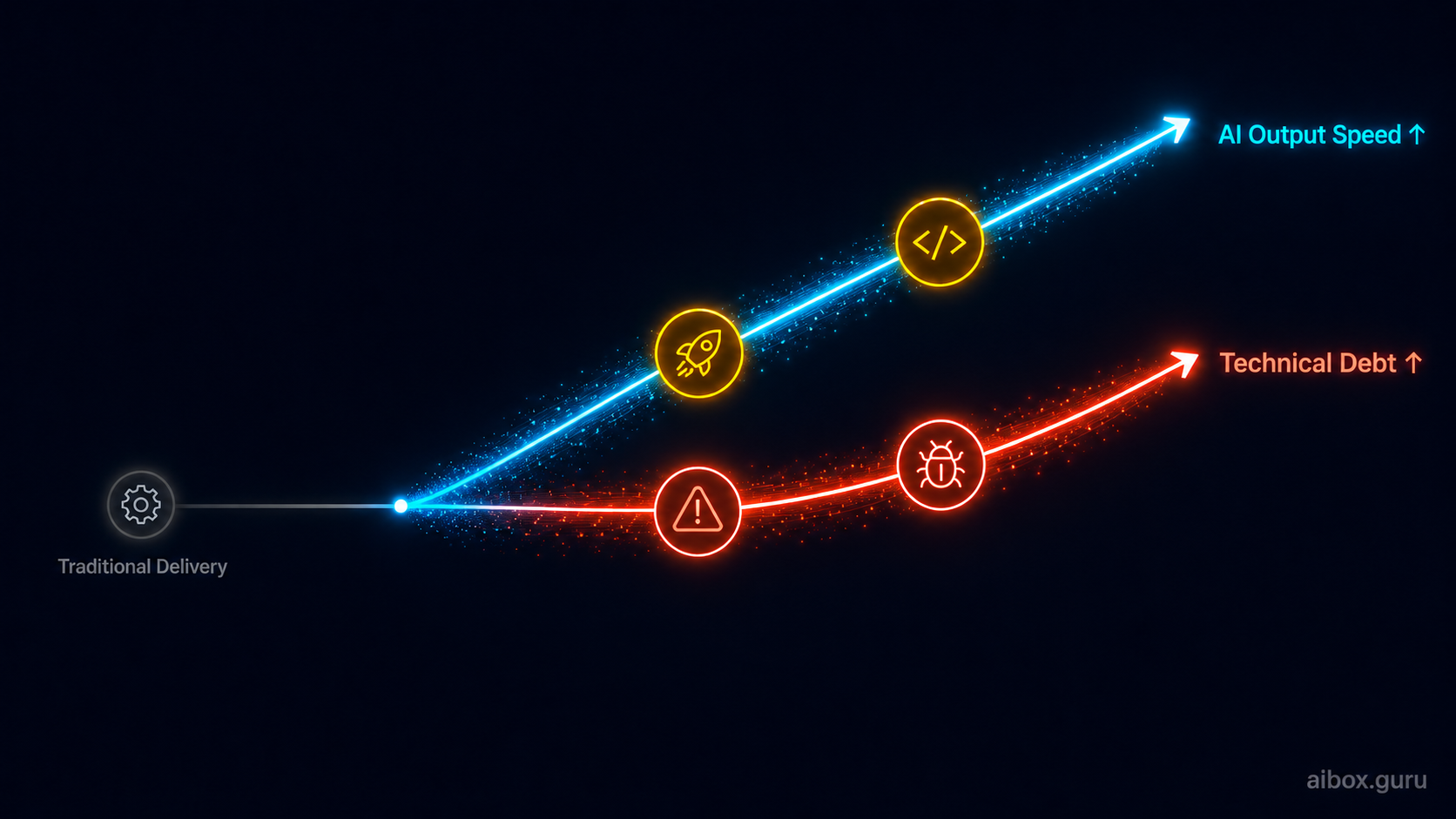
AI output speed vs technical debt trajectory
ภาพที่ 1: AI เร่ง output และ technical debt พร้อมกัน — ถ้าไม่มี governance ทั้งสองเส้นพุ่งขึ้นพร้อมกัน

AI coding tool เร่ง output แต่ขยาย discipline ที่มีอยู่ — องค์กรที่มีแค่ความเร็วโดยไม่มี context, specification และ governance จะพบว่า AI กลายเป็นเครื่องผลิต technical debt ที่เร็วกว่าเดิม

Vibe Coding

2. Vibe Coding: ความเร็วที่มีประโยชน์ แต่ไม่ใช่ Operating Model ของ Enterprise

ก่อนจะพูดถึง platform และ governance ต้องพูดถึง Vibe Coding ก่อน เพราะมันคือจุดเริ่มต้นที่หลายองค์กรกำลังอยู่

Vibe Coding — คำที่ Andrej Karpathy ทำให้เป็นที่รู้จักในบริบทของการใช้ AI coding assistant เพื่อสร้างหรือแก้ code อย่างรวดเร็วผ่าน natural language interaction — มีประโยชน์จริงในหลายบริบท1

Vibe Coding ทำให้ prototype เกิดขึ้นได้ภายในชั่วโมง ช่วยให้ business เห็น idea เป็นของจริงเร็วขึ้น ลด blank page problem และลดเวลาทำ boilerplate code ได้มาก สำหรับ Proof of Concept, MVP, feature spike, internal utility หรือ disposable script มันคือวิธีทำงานที่สมเหตุสมผลมาก

ปัญหาเกิดขึ้นเมื่อ Vibe Coding ถูกนำไปใช้กับ production system โดยตรง เพราะเมื่อระบบโตขึ้น code ที่สร้างเร็วโดยไม่มี context, architecture rule หรือ specification รองรับจะเริ่มสะสมปัญหาที่มองไม่เห็นในทันที — code inconsistency และ architecture drift ที่แต่ละทีมสร้างคนละแบบ, traceability ที่หายไปจนไม่มีใครรู้ว่า code นี้สร้างจาก requirement ใด และ technical debt ที่ดูดีบน surface แต่เปราะบางข้างใน

ที่อันตรายที่สุดคือ security gap กับ compliance risk ที่ตรวจไม่ออกจาก code review ปกติ เพราะมันซ่อนอยู่ใน logic ที่ AI สร้างมาให้โดยไม่มีใครถาม intent ที่แท้จริง

เหตุผลที่ข้อจำกัดเหล่านี้รู้สึกไม่เห็นในช่วงแรกคือ ระบบที่รองรับผู้ใช้ไม่กี่ร้อยคนในสภาพแวดล้อมที่คาดเดาได้ยังไม่ต้องเผชิญกับ dimension ที่ทำให้ engineering discipline มีความหมายจริง ๆ แต่เมื่อระบบเริ่มโต ปัญหาที่ต้องแก้ไม่ใช่ "เขียน code อีกชุดได้หรือเปล่า" — แต่คือ architecture, reliability, performance engineering, security, data consistency, observability, infrastructure และ cost efficiency ที่ทำงานร่วมกันภายใต้ load และ failure mode จริง

ความท้าทายเหล่านี้ไม่ได้ถูก generate ออกมาจาก prompt และไม่ได้ถูกแก้ด้วยการเขียน code เพิ่ม มันสะสมมาจากการออกแบบที่ผิดตั้งแต่ต้น และถูกซ่อนไว้โดย load ที่น้อยเกินกว่าจะเห็น เมื่อ distribution เริ่มทำงานจริงและผู้ใช้เพิ่มขึ้น technical debt ที่เคยดูเหมือนรายละเอียดเล็กน้อยจะกลายเป็นภาระที่แก้ยากและแพงกว่าเดิม ไม่ใช่เพราะ AI เขียน code ผิด แต่เพราะระบบไม่ได้ถูกออกแบบมาเพื่อ scale อย่างมีวินัย

AI ลดต้นทุนในการสร้าง software ลงอย่างมีนัยสำคัญ แต่เมื่อการสร้าง code ถูกลงและเร็วขึ้น ความได้เปรียบจะไม่ได้อยู่ที่ใครสร้าง feature ได้เร็วที่สุดอีกต่อไป แต่อยู่ที่ใครออกแบบ system ที่ scale ได้อย่างปลอดภัย ตรวจสอบได้ และ cost-efficient. Prototype สามารถพิสูจน์ว่า demand มีอยู่จริง แต่ engineering discipline คือสิ่งที่เปลี่ยน demand นั้นให้กลายเป็นระบบที่รับผิดชอบได้จริงในระยะยาว

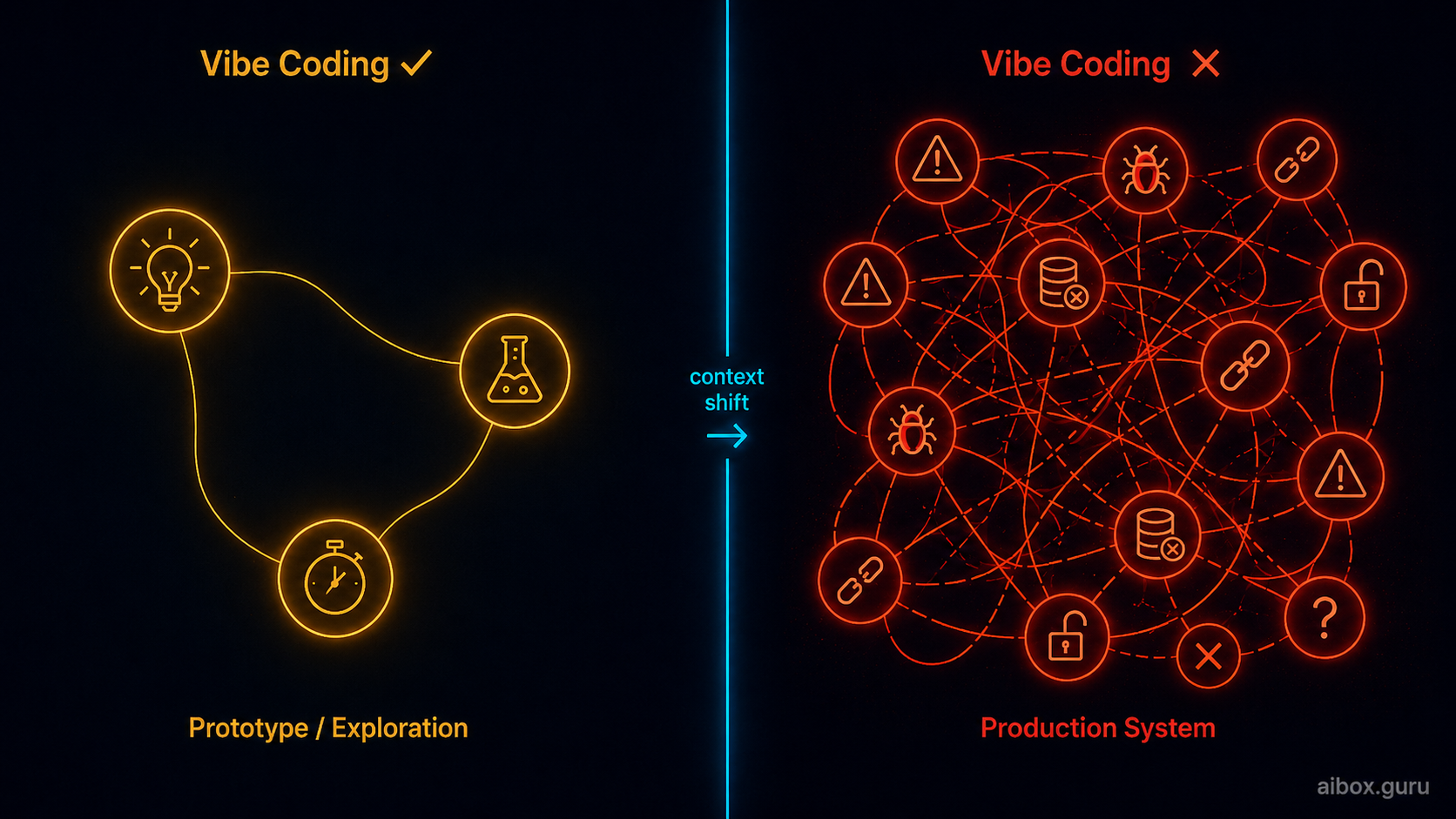
Vibe Coding ไม่ใช่ปัญหา ปัญหาคือการเอา Vibe Coding ไปใช้กับ production system โดยไม่มี context, specification และ governance รองรับ

Vibe Coding ใน context ที่ถูก vs ผิด
ภาพที่ 2: เครื่องมือเดิม บริบทต่างกัน — Vibe Coding เหมาะกับ prototype และ exploration ไม่ใช่ production system

Spec-Driven

3. Spec-Driven Development: จากการสั่งให้ AI เขียน Code สู่การบังคับให้ AI ทำตาม Intent

ถ้า Prompt Engineering คือการทำให้ AI ตอบดีขึ้นในงานเฉพาะหน้า และ Context Engineering คือการทำให้ AI ไม่ต้องเริ่มต้นใหม่ทุก session — ขั้นถัดไปคือการทำให้ AI ไม่เพียง "รู้บริบท" แต่ "สร้างงานตาม intent ที่ตรวจสอบได้" นี่คือจุดที่ specification discipline เริ่มมีบทบาท

และมันไม่ใช่การกลับไปทำเอกสารหนา ๆ แบบ waterfall

Spec-Driven Development หมายถึงการทำให้ intent, requirement, architecture decision และ constraint ชัดพอที่มนุษย์และ AI จะทำงานร่วมกันได้อย่างถูกต้อง

Specification ที่ดีในบริบทนี้คือ artefact ที่ testable, traceable, versioned และ machine-readable ได้บางส่วน เช่น Business Requirement, User Story, Acceptance Criteria, Architecture Decision Record (ADR), API Specification, Data Contract, Security Requirement และ Deployment Criteria

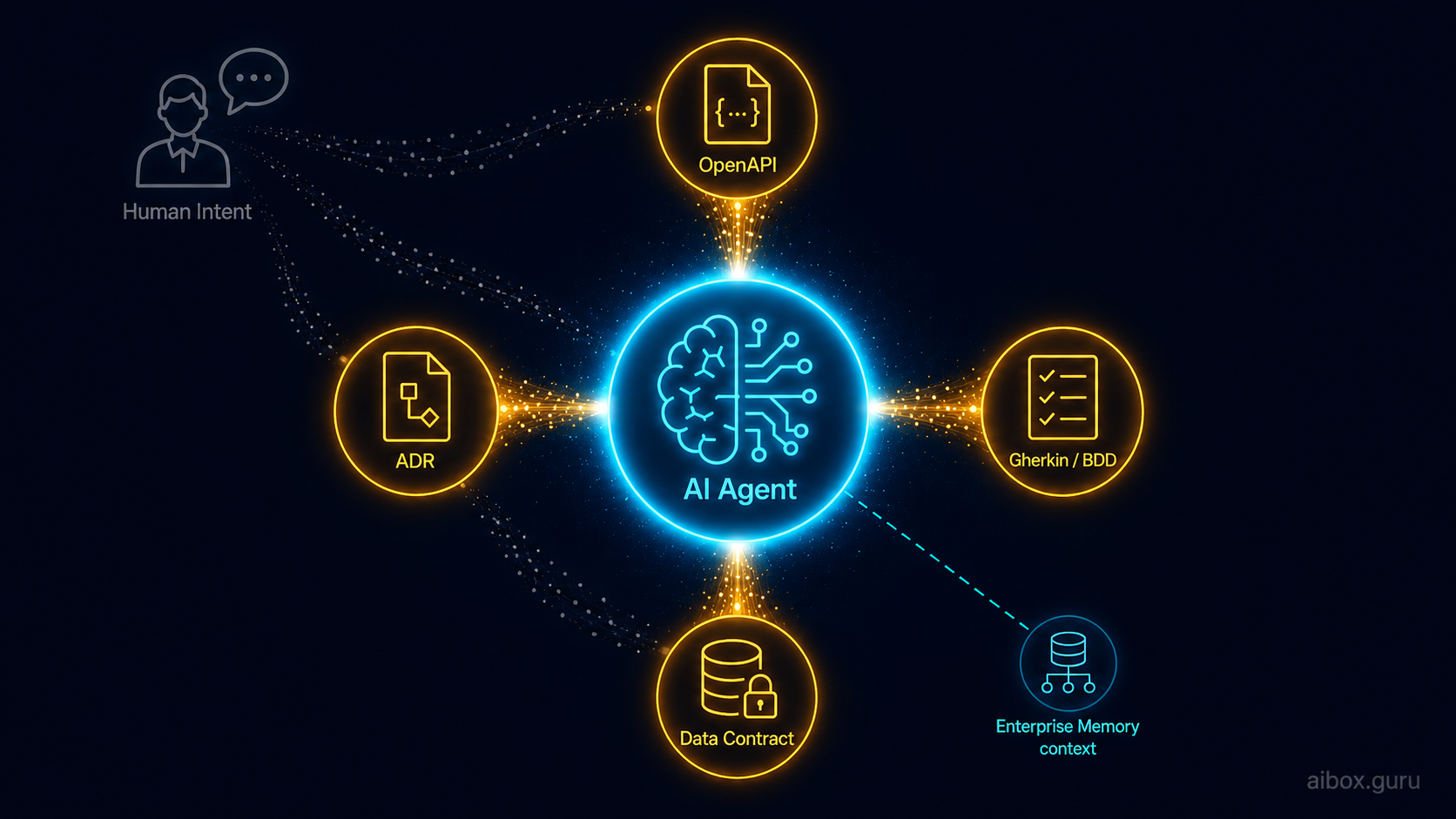
สิ่งที่ทำให้ Spec-Driven Development แตกต่างจากเดิมคือ specification เหล่านี้ไม่ได้มีไว้ให้มนุษย์อ่านอย่างเดียว แต่เป็น input ให้ AI agent และ automation pipeline ใช้ต่อได้โดยตรง ไม่ว่าจะเป็น OpenAPI สำหรับ API contract, Gherkin สำหรับ test scenario, ADR สำหรับ architecture rationale หรือ Policy-as-Code สำหรับ compliance rule

Context กับ Spec ต้องอยู่คู่กัน

Context EngineeringSpec-Driven Development
เก็บproject memorydelivery intent
บอกhistory / decision / rulerequirement / acceptance / constraint
ลดcontext lossrequirement ambiguity
ทำให้ AIไม่ต้องเริ่มจากศูนย์ไม่สร้างผิดเป้าหมาย

Context ที่ดีทำให้ AI เข้าใจอดีตของโปรเจกต์ Spec ที่ดีทำให้ AI เข้าใจอนาคตที่ต้องสร้าง

และ Spec-Driven Development จะยิ่งมีพลังเมื่อ specification ไม่ได้ลอยอยู่เป็นเอกสารเดี่ยว แต่เชื่อมกับ enterprise memory ที่รู้ว่า API นี้อยู่ใน system ใด, data contract นี้กระทบ domain ไหน, downstream service ใดจะได้รับผลกระทบ นี่คือจุดที่ Enterprise AI Memory และ knowledge graph เข้ามาช่วยให้ spec กลายเป็น relationship-aware delivery artefact ไม่ใช่แค่ requirements document ที่ AI อ่านผ่าน ๆ

Spec เป็นภาษากลางระหว่าง human intent และ AI generation
ภาพที่ 3: Spec คือภาษากลาง — OpenAPI, Gherkin, Data Contract และ ADR เป็น input ให้ AI agent ทำงานตาม intent ได้จริง

ในโลกก่อน AI ทีมใช้ checklist หลังจาก dev ทำงานเสร็จ ไม่ว่าจะเป็น performance checklist, accessibility checklist หรือ security checklist แต่เมื่อ AI สร้าง code ได้เร็วขึ้น ถ้ารอให้มนุษย์ตรวจทั้งหมดหลัง generation ความเร็วของ AI จะสร้างคิวงานที่ตรวจไม่ทัน

แนวโน้มที่น่าสนใจคือการเปลี่ยน checklist เหล่านี้ให้กลายเป็น instruction, skill หรือ audit rule ที่ AI agent ใช้ ระหว่าง ทำงาน ไม่ใช่หลังจากทำเสร็จแล้ว มีเครื่องมือรุ่นใหม่บางกลุ่มที่ encode quality expectation เช่น performance, accessibility, security และ framework anti-patterns ให้ agent audit ได้ระหว่างทำงาน2 แต่ประเด็นสำคัญไม่ใช่ชื่อเครื่องมือเหล่านั้น — แต่อยู่ที่ pattern ที่อยู่ข้างหลัง: quality standard ที่เคยอยู่ในหัว senior engineer กำลังถูกแปลงเป็น artefact ที่ AI อ่านและใช้ตรวจงานได้

AI Agent ที่ดีไม่ควรแค่รู้ context ของโปรเจกต์ แต่ต้องรู้ quality standard ที่โปรเจกต์ยอมรับด้วย

Platform

4. Governed AI Delivery Platform: Operating Model ไม่ใช่ Tool Set

เมื่อ context, enterprise memory, specification และ quality gate เริ่มกลายเป็น artefact ที่ agent อ่านได้ สิ่งที่องค์กรต้องการต่อไปไม่ใช่ tool เพิ่มขึ้น แต่คือ operating model ที่รวมทุกอย่างเข้าด้วยกันอย่างมีระเบียบ

Governed AI Delivery Platform คือ control plane ที่ทำให้ AI agent, developer, architect, security team และ operations ทำงานภายใต้ context, relationship, specification, quality gate, policy, workflow และ audit trail เดียวกัน

คำนี้ยังไม่มีนิยามมาตรฐานในอุตสาหกรรม บทความนี้ใช้ในฐานะ reference operating model ไม่ใช่ vendor category หรือ product tier3

วงจรการทำงานที่แตกต่างจาก Vibe Coding

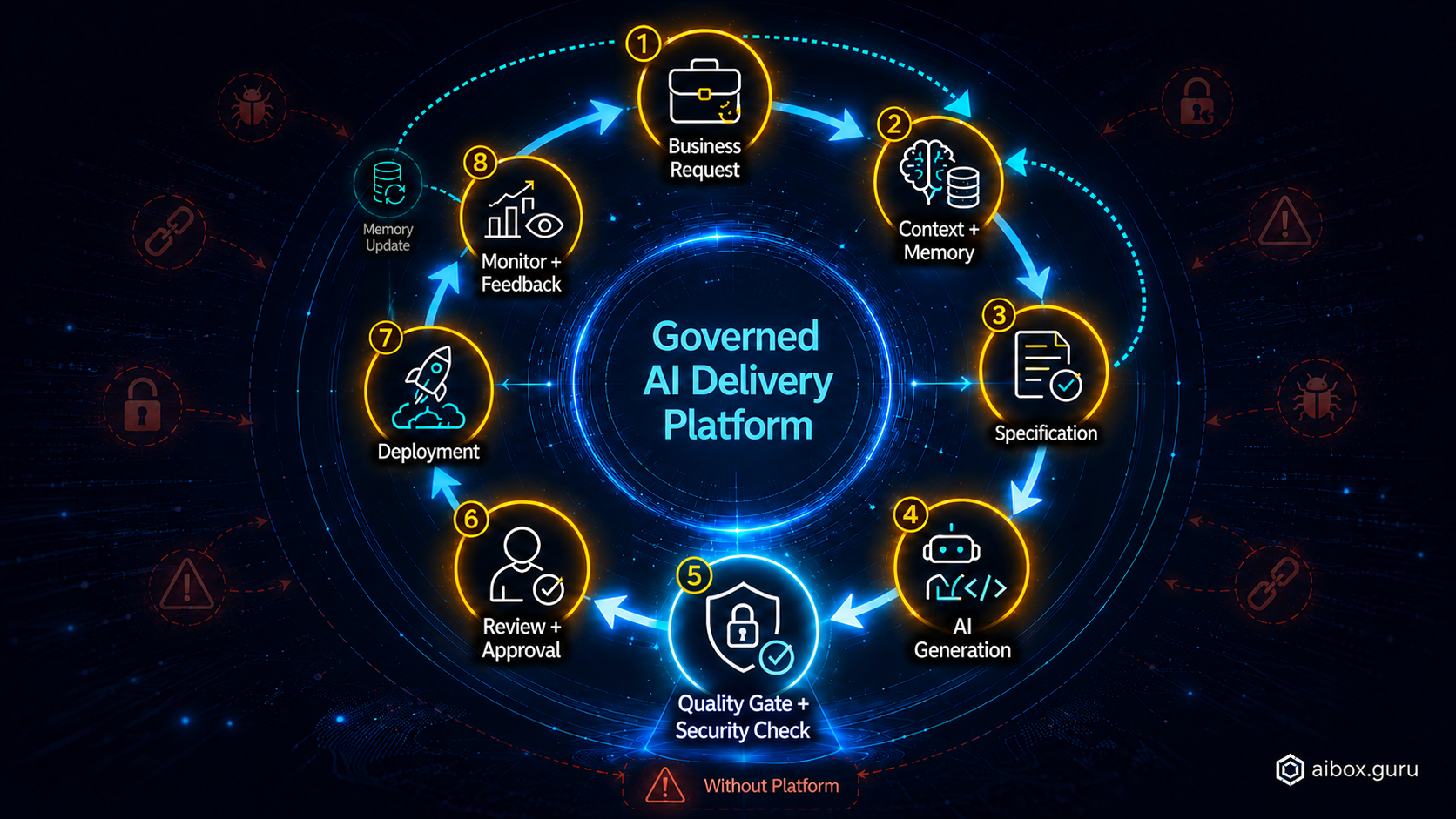
Governed AI Delivery Platform ไม่ได้เริ่มจาก "เปิด IDE แล้วเขียน prompt" แต่เริ่มจาก business request ที่ถูก capture เข้าสู่ workflow จากนั้น platform ดึง context ที่เกี่ยวข้องจากทั้ง project memory และ enterprise memory เช่น architecture decision เดิม, API dependency, system owner, policy ที่ใช้บังคับ, incident history และ data classification

เมื่อ context พร้อมแล้ว requirement ถูกแปลงเป็น specification ที่ตรวจสอบได้ก่อนที่ AI agent จะเริ่มสร้างหรือแก้ code output ต้องผ่าน quality gate, security check, test และ architecture review พร้อมบันทึก audit evidence ว่า AI ใช้ context อะไร ใช้ spec version ใด ผ่าน gate อะไร และใครเป็น approver สุดท้าย monitoring และ production feedback ย้อนกลับมาอัปเดต memory, spec และ governance rule เพื่อให้รอบถัดไปดีขึ้น

โมเดลนี้ควรถูกอ่านในฐานะ target operating model หรือ reference architecture ไม่ใช่ข้อเท็จจริงว่าองค์กรส่วนใหญ่สามารถให้ AI agent ทำงานครบ end-to-end ได้แล้วในวันนี้

Business Request
→ Context + Enterprise Memory Retrieval
→ Specification
→ AI Code Generation (under context + spec)
→ Quality Gate + Security Check
→ Test + Architecture Review
→ Release Approval
→ Deployment
→ Monitoring Feedback → Memory / Spec Update
Governed AI Delivery Platform loop — 8-stage operating model
ภาพที่ 4: Governed AI Delivery Platform — วงจร 8 ขั้นที่ทำให้ business request เดินไปถึง production อย่างปลอดภัย ตรวจสอบได้ และวนกลับมาปรับปรุง memory

เมื่อ Layers กลายเป็น Control Surfaces

แกนของ Governed AI Delivery Platform ไม่ได้อยู่ที่จำนวนเครื่องมือ แต่อยู่ที่การทำให้ 4 สิ่งเกิดขึ้นพร้อมกันใน delivery workflow เดียว

หนึ่ง — context และ enterprise memory ต้องถูกดึงมาอย่างถูกต้องก่อน generation เพื่อให้ AI เข้าใจทั้งบริบทของโปรเจกต์และความสัมพันธ์ระดับองค์กร ไม่ใช่แค่ "อ่านไฟล์ที่มีอยู่" — นี่คือจุดที่ relationship-aware enterprise memory เชื่อมเข้ากับ delivery workflow โดยตรง

สอง — requirement ต้องถูกแปลงเป็น specification ที่ตรวจสอบได้ เพื่อให้ AI สร้างงานตาม intent ที่มนุษย์กำหนด ไม่ใช่ตามการตีความ prompt ที่อาจเปลี่ยนไปทุก session

สาม — quality gate, policy และ security control ต้องทำงานระหว่างทาง ไม่ใช่หลังจาก code ถูกสร้างเสร็จแล้ว เพราะถ้ารอตรวจทีหลัง ความเร็วของ AI จะสร้างคิวงานที่ตรวจไม่ทัน และ debt จะสะสมเร็วกว่าที่ทีมจะรับมือได้

สี่ — ทุก change ต้องมี workflow, approval และ audit evidence ที่ย้อนกลับมาตรวจได้ ไม่ใช่เพียงเพื่อ compliance แต่เพราะเมื่อ production เกิดปัญหา องค์กรต้องตอบได้ว่า AI ทำอะไร โดยใช้ข้อมูลอะไร กระทบระบบใด และใครอนุมัติ

layers ต่าง ๆ เช่น memory, spec, quality gate, policy, security, workflow, audit และ platform engineering จึงไม่ใช่ feature list แต่คือ control surfaces ของ operating model เดียวกัน องค์กรไม่จำเป็นต้องสร้างทั้งหมดพร้อมกัน — จุดเริ่มต้นที่สมเหตุสมผลสำหรับส่วนใหญ่คือ context discipline และ specification discipline ก่อน แล้วค่อยขยายไปสู่ policy enforcement และ audit trail เมื่อ maturity พร้อม

Governed AI Delivery Platform คือ DevSecOps + Platform Engineering + Context Engineering + Enterprise AI Memory + Spec-Driven Development + AI Governance ที่ทำงานร่วมกันภายใต้ operating model เดียว

Architect Roles

5. บทบาทใหม่ของ Architect และ Engineering Leader

เมื่อ delivery model เปลี่ยน บทบาทที่เปลี่ยนตามไม่ใช่แค่ developer แต่คือทุกคนที่ออกแบบและกำกับ system

AI ทำให้ Architect สำคัญขึ้น ไม่ใช่น้อยลง เพราะองค์กรต้องการคนที่ออกแบบ boundary, rule, policy, context, specification, relationship และ decision model ให้ AI ทำงานได้อย่างถูกต้อง

Enterprise Architect ต้องออกแบบ AI delivery operating model ทั้งหมด กำหนด policy domain, วาง architecture governance, เชื่อม business capability กับ platform และเชื่อม Enterprise AI Memory เข้ากับ delivery governance

Solution Architect ต้องแปลง requirement เป็น architecture blueprint ที่ AI ใช้เป็น spec ได้จริง คุม API governance, data contract, ตรวจ AI-generated design และใช้ relationship awareness วิเคราะห์ impact ของ change ก่อนที่ AI จะ generate

Cloud / Infrastructure Architect ต้องออกแบบ runtime boundary สำหรับ AI agent ที่มีสิทธิ์เข้าถึง environment จริง คุม identity, network, secrets, sandbox, IaC, policy-as-code และ observability ของ AI workflow ที่อาจใช้ compute สูงกว่าที่คาดไว้

Security Architect ต้อง threat model สำหรับ AI-assisted SDLC ที่มี attack surface ใหม่ เช่น prompt injection, agent privilege escalation, data leakage ผ่าน context ที่ส่งให้ model และต้อง design audit evidence chain ที่ตรวจสอบได้ตามมาตรฐาน security

Software Engineering Leader ต้องปรับ engineering standard ทั้งหมด สร้าง AI coding policy, ออกแบบ review model สำหรับ AI-generated code, วัด productivity โดยไม่ตกหลุม fake velocity และพัฒนา junior engineer ให้ตรวจงาน AI ได้จริง ไม่ใช่แค่ merge code ที่ดูผ่าน ๆ

อนาคตของ Software Leader ไม่ใช่แค่บริหารคนเขียน code แต่คือบริหารระบบที่มนุษย์และ AI agent ร่วมกันสร้าง software ภายใต้ accountability เดียวกัน

Value & Risk

6. Value, Risk และ Maturity: ความได้เปรียบที่แท้จริงไม่ใช่ Code Velocity

Value ที่องค์กรจะได้

Governed AI Delivery Platform ให้ value ที่ชัดเจนหลายด้าน ได้แก่ Faster Delivery ในส่วนงานซ้ำเช่น requirement draft, code scaffold, test generation, documentation และ release note; Better Maintainability เพราะ spec, context, enterprise memory และ architecture rule ลดการ generate code แบบเฉพาะหน้า; Lower Rework เพราะ requirement ที่ชัดและ acceptance criteria ที่ตรวจได้ลดการแก้งานวนซ้ำ; Better Compliance เพราะทุก change เชื่อมกับ request, approval, test, quality gate และ deployment evidence; และ Better Auditability เพราะองค์กรตอบได้ว่าใครขอ change, AI ใช้ context อะไร, quality gate อะไรผ่านหรือไม่ผ่าน และ change กระทบระบบใด

Risk และ Cost ที่ต้องเตรียมจ่าย

Platform นี้ไม่ได้ถูกและง่าย ความเสี่ยงที่ต้องประเมินตรง ๆ ได้แก่:

Platform Complexity — ต้องใช้ความสามารถด้าน DevSecOps, cloud, security, architecture, AI workflow และ platform engineering พร้อมกัน

Governance Bottleneck — ถ้า governance แข็งเกินไป ทีมจะ bypass platform และเกิด shadow AI ซึ่งอันตรายกว่าการไม่มี governance เสียอีก

Poor Context และ Memory Quality — ถ้า Memory Vault stale หรือ knowledge graph ผิด AI จะใช้ context ผิดอย่างมั่นใจ เช่น เข้าใจผิดว่า API นี้ไม่กระทบ downstream system ใด ทั้งที่จริงกระทบระบบสำคัญ

Fake Productivity — จำนวน code, PR หรือ feature เพิ่มขึ้น แต่ quality และ maintainability อาจลดลง การวัดผลด้วย velocity metrics อย่างเดียวจะทำให้มองไม่เห็น debt ที่กำลังสะสม

Security Exposure — AI agent ที่มีสิทธิ์มากเกินไปอาจเข้าถึง repo, secrets, production data หรือ cloud environment ที่ไม่ควรเข้าถึง

Talent Risk — Junior developer อาจพึ่ง AI มากเกินไปจนขาดพื้นฐานในการตรวจงาน AI

Maturity Framework

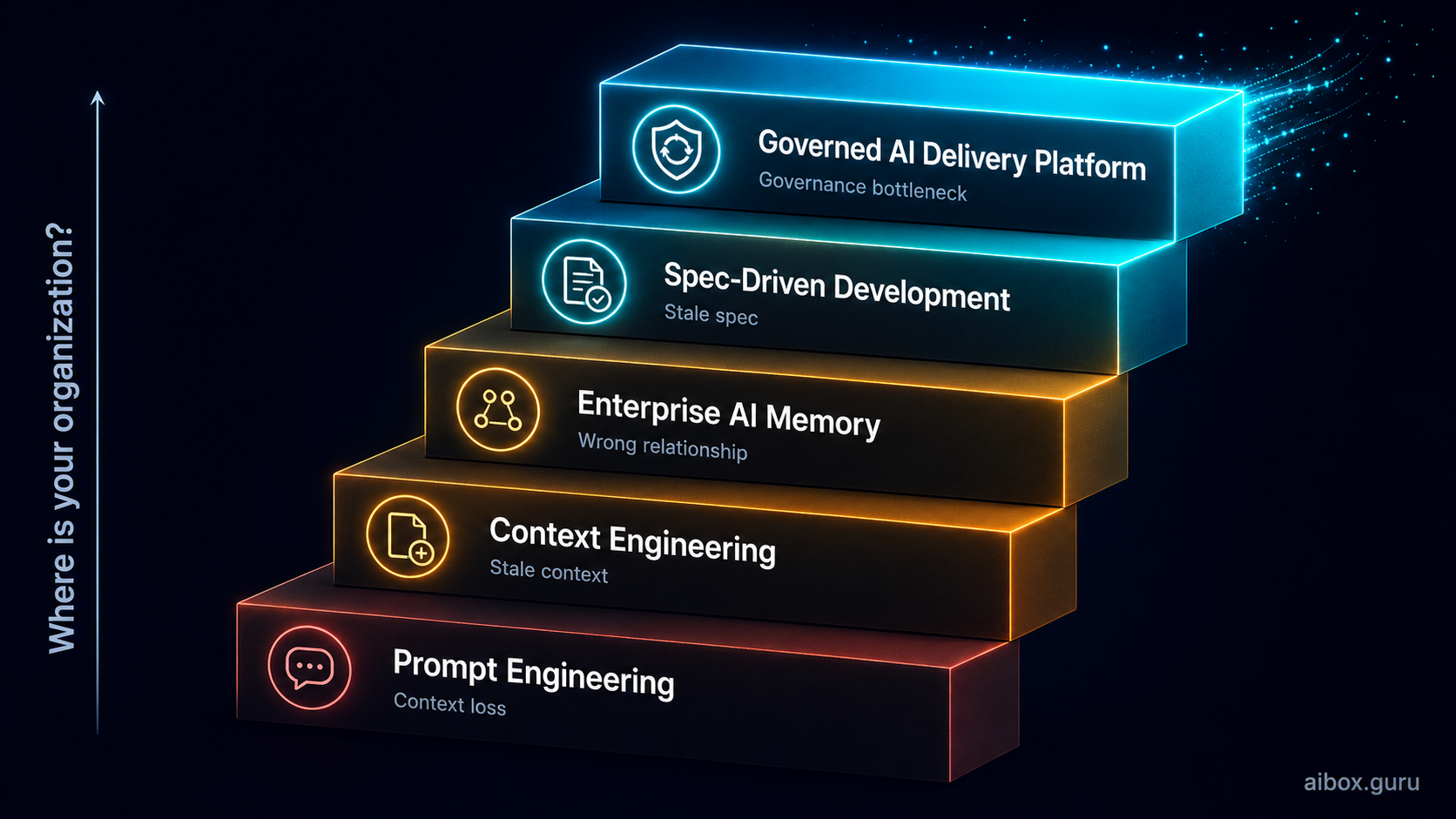
มิติPrompt EngineeringContext EngineeringEnterprise AI MemorySpec-Driven DevelopmentGoverned AI Delivery Platform
จุดเริ่มต้นPromptProject memoryEnterprise relationshipRequirement / specBusiness request + governed workflow
เป้าหมายตอบดีใน sessionทำงานต่อเนื่องข้าม sessionเข้าใจความสัมพันธ์และ impactสร้างตาม intentส่งมอบอย่างปลอดภัย ตรวจสอบได้ และ scale ได้
ตัวกลางหลักInstructionMemory Vault / LLM WikiKnowledge graph / provenanceSpec / contract / ADRPolicy / workflow / control plane
AI ทำอะไรตอบและช่วยเขียนอ่านบริบทที่เกี่ยวข้องreason over relationshipสร้างตามข้อกำหนดทำงานภายใต้ governance
Human controlPrompt reviewContext curationSource-of-truth governanceSpec approvalRisk acceptance / production approval
Governance levelต่ำเริ่มต้นกลางถึงสูงกลางถึงสูงสูง
Enterprise readinessต่ำปานกลางสูงขึ้นเมื่อมี governanceสูงขึ้นสูงสุดเมื่อมี operating model
Failure modeprompt driftstale contextwrong relationship / false impactstale spec / heavy processgovernance bottleneck / platform complexity
AI Delivery Maturity Staircase — 5 ระดับ
ภาพที่ 5: Maturity Staircase — ไม่มีองค์กรใดข้ามขั้น รู้ว่าตัวเองอยู่ขั้นใดคือจุดเริ่มต้น

คำถามที่ยังต้องตอบ

องค์กรขนาดกลางที่ยังไม่มี platform engineering team ควรเริ่มจากอะไรก่อน ระหว่าง context discipline, enterprise memory, spec discipline, DevSecOps pipeline และ AI usage policy? ใครควรเป็น owner ของ Governed AI Delivery Platform ระหว่าง CIO, CTO, Enterprise Architecture, Platform Engineering หรือ Security? และ regulatory framework ในไทยพร้อมรองรับ AI-generated code และ AI-assisted SDLC แค่ไหน? คำถามเหล่านี้ยังไม่มีคำตอบสำเร็จรูป และนั่นคือเหตุผลที่บทความนี้นำเสนอ operating model ไม่ใช่ prescription

Conclusion

บทสรุป: ความได้เปรียบที่ยั่งยืนไม่ได้อยู่ที่ความเร็วในการเขียน Code

AI ทำให้การผลิต code เร็วขึ้น แต่ไม่ได้ทำให้ delivery maturity เกิดขึ้นเอง

ในช่วง 2-3 ปีที่ผ่านมา หลายองค์กรวัดความสำเร็จของ AI adoption ด้วยจำนวน PR, lines of code หรือ feature ที่ deploy ได้เร็วขึ้น แต่ตัวเลขเหล่านั้นไม่บอกว่า architecture drift สะสมไปเท่าไร, audit evidence ครบไหม หรือ junior developer กำลัง merge code ที่ตัวเองไม่เข้าใจเพราะ AI สร้างมาให้

ความได้เปรียบที่แท้จริงขององค์กรในยุค AI ไม่ใช่การมี coding assistant ที่เก่งที่สุด แต่คือความสามารถในการเปลี่ยน context, relationship, intent, policy และ delivery control ให้กลายเป็นระบบเดียวที่ AI ทำงานภายใต้ได้อย่างปลอดภัย ตรวจสอบได้ และขยายได้จริง

สำหรับ Enterprise Architect, Solution Architect, Cloud/Infrastructure Architect และ Security Architect นี่คือ mandate ใหม่ — ไม่ใช่แค่ออกแบบระบบที่ AI ใช้งานได้ แต่คือออกแบบ operating model ที่ AI ทำงานอย่างรับผิดชอบได้ และความท้าทายที่แท้จริงของงานนี้ไม่ใช่เรื่องของเทคโนโลยี แต่คือ operating discipline, ownership และ accountability ขององค์กร

ในยุค AI ความเร็วในการเขียน code จะไม่ใช่ความได้เปรียบที่ยั่งยืนอีกต่อไป ความได้เปรียบที่แท้จริงคือความสามารถขององค์กรในการเปลี่ยน context, relationship, intent, policy และ governance ให้กลายเป็นระบบที่ AI ทำงานได้อย่างปลอดภัย ตรวจสอบได้ และขยายได้จริง

References

References

  1. "Vibe coding" เป็นคำที่ Andrej Karpathy ทำให้เป็นที่รู้จักในเดือนกุมภาพันธ์ 2025 ผ่านโพสต์บน X ซึ่งอธิบายการใช้ AI coding assistant แบบยอม "give in to the vibes" และให้ AI ช่วยสร้างหรือแก้ code อย่างรวดเร็ว เหมาะกับงานทดลองหรือ weekend project มากกว่าการนิยามเป็น methodology ระดับ production; ดูโพสต์ต้นฉบับของ Karpathy: https://x.com/karpathy/status/1886192184808149383?lang=en และบทความอธิบายบริบทโดย Ars Technica: https://arstechnica.com/ai/2025/03/is-vibe-coding-with-ai-gnarly-or-reckless-maybe-some-of-both/ ↩
  2. ณ วันที่ editorial review (2026-06-05) — React Doctor (https://github.com/millionco/react-doctor) เป็น public repo ที่ active รองรับ CI integration และ agent skill install, ใช้เป็น example of pattern ได้แต่ไม่ควร frame เป็น industry standard / Web Quality Skills (https://github.com/addyosmani/web-quality-skills) เป็น public repo และ README ระบุชัดว่าเป็น unofficial — ถ้าจะกล่าวถึงในบทความเต็มต้องระบุ unofficial ด้วยทุกครั้ง บทความ version นี้ตั้งใจไม่ระบุชื่อเครื่องมือในเนื้อหาหลักเพื่อป้องกัน tool-review drift ↩
  3. คำว่า "Governed AI Delivery Platform" ใช้เป็น author-defined operating model concept บทความนี้ไม่ได้อ้างว่าเป็น established industry term ถ้าต้องการอ้างอิง framework ภายนอกให้ตรวจสอบ NIST AI RMF, Gartner AI Governance framework หรือ DORA research ที่เกี่ยวข้อง ↩